
Range Is Valuable. Most Organizations Still Don’t Know How to Evaluate It.
September 2026
As work becomes more cross functional, companies increasingly rely on people who can connect disciplines. Their talent systems have not fully caught up.
I recently reopened a folder of writing I had not read in nearly sixteen years.
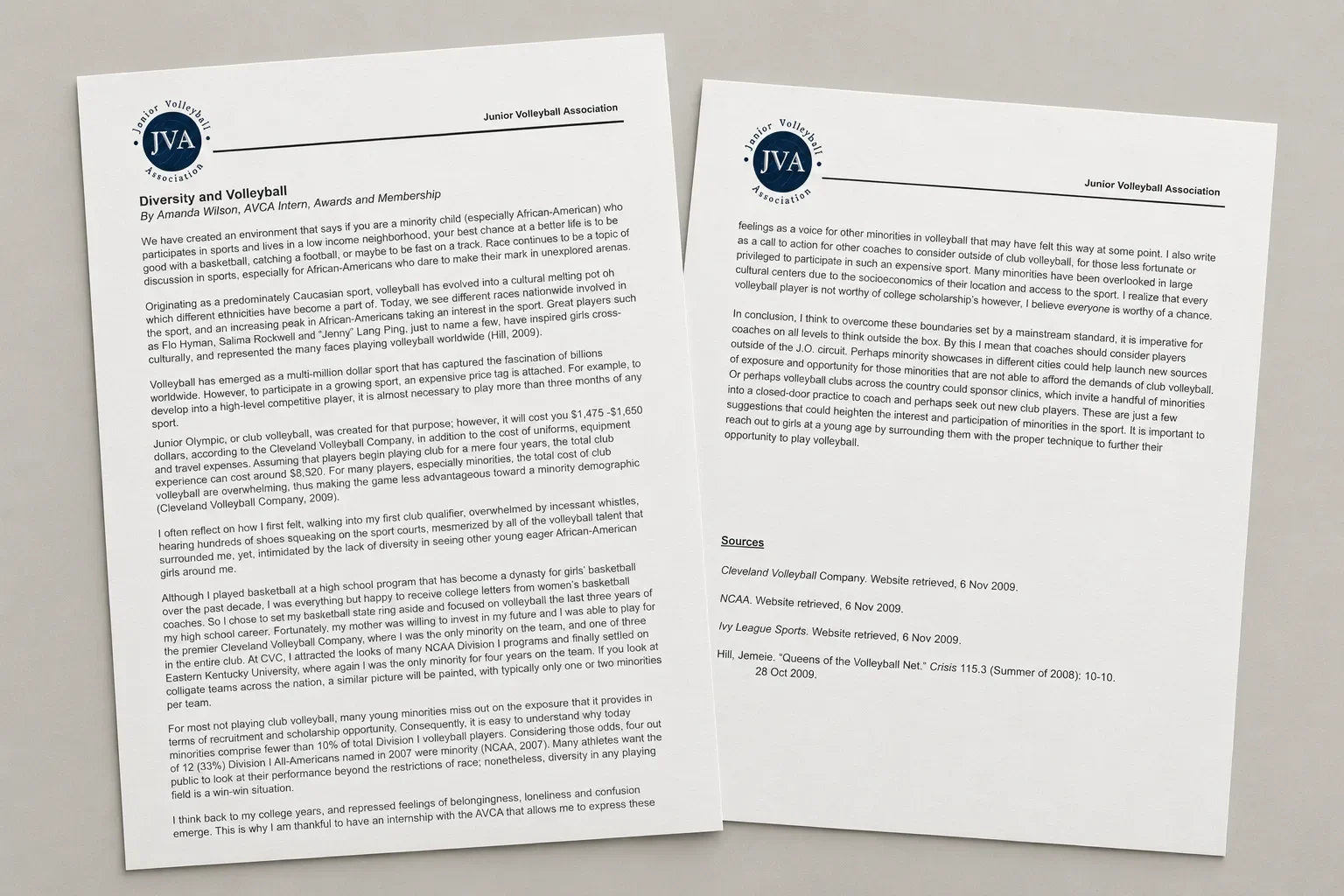
There were graduate school papers on race and gender in athletic administration, governance and college sports economics; an NCAA scholarship application essay explaining why I was widening my ambitions beyond sports psychology; and a published article I had written about access to volleyball.
The writing sounded young.
The questions did not.
Who gets access? How does value move through a system? What determines where someone belongs? What happens when the capabilities required by the work do not fit neatly inside the way a role is defined?
At the time, I was not developing a theory of careers or organizations. I was observing the environments immediately in front of me and trying to understand why they produced the outcomes they did.
In hindsight, that may have been the beginning of a hypothesis.
Across a career spanning professional sports, consumer goods, industrial technology and financial services, I kept entering new systems, studying how their parts worked together and translating among people who understood different pieces of the whole.
For years, I thought the unusual part of my career was the number of industries on my résumé.

Now I think the industries are the evidence.
Range often develops before we know what to call it.
I grew up in an athletic family. Both of my parents played sports, as did my brother, and I moved naturally among volleyball, basketball and track.
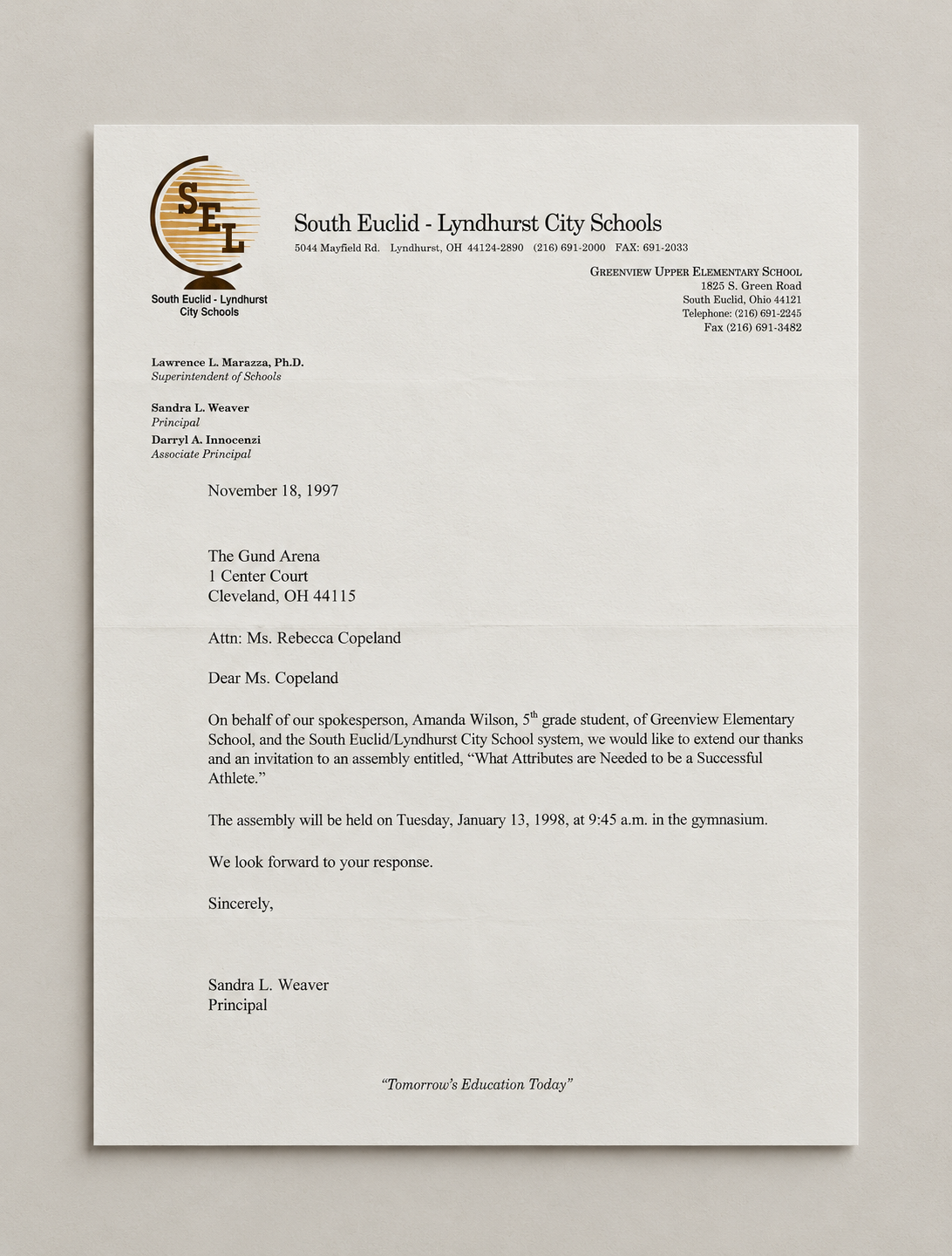
Sports also gave me an early experiment in turning an idea into something other people could participate in. My family had season tickets behind the Cleveland Rockers bench. When my mother had an idea for an elementary school assembly about what it took to become a successful athlete, she pushed fifth grade me to pitch it. I did. The resulting program brought a professional athlete and high school basketball players together with students at my school.
I did not have language for partnerships, programming or stakeholder engagement. I had an idea, a relationship and a microphone.
By high school, basketball looked like the obvious path. I had played on a state championship team and college letters were arriving. But I became honest with myself: I did not want to play basketball in college.
So I changed arenas.
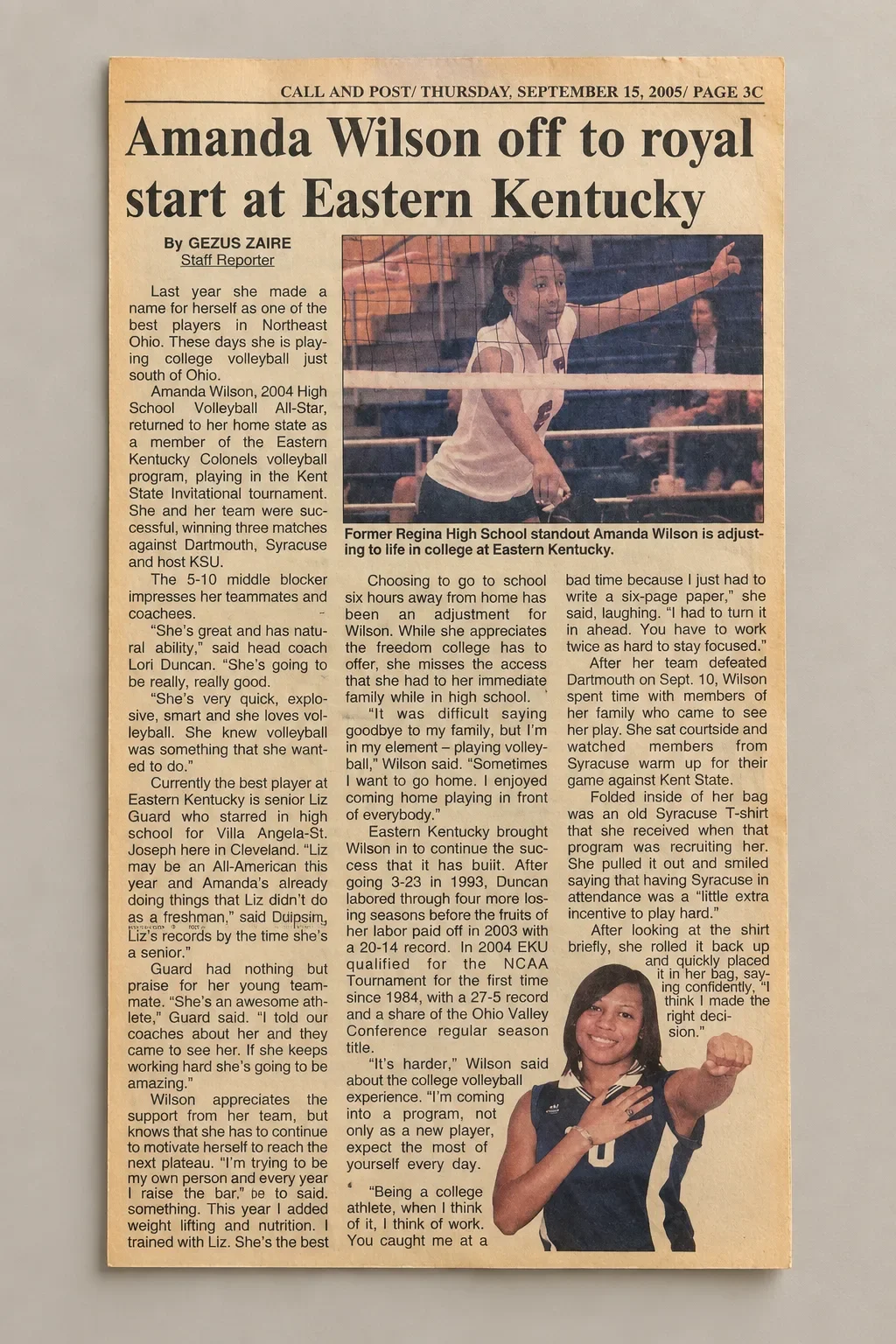
Volleyball became my primary sport and eventually my path to a Division I scholarship at Eastern Kentucky University, where I studied psychology.
After my volleyball career, while finishing my undergraduate work, I wrote a published piece examining diversity in the sport. Through an internship with the American Volleyball Coaches Association, I looked at how the economics of elite club participation affected recruiting visibility and access to scholarships, then proposed other ways coaches and clubs might identify talent outside that pipeline.
I was not trying to become interdisciplinary.
I was following questions.
Some of the most durable professional education is accidental.
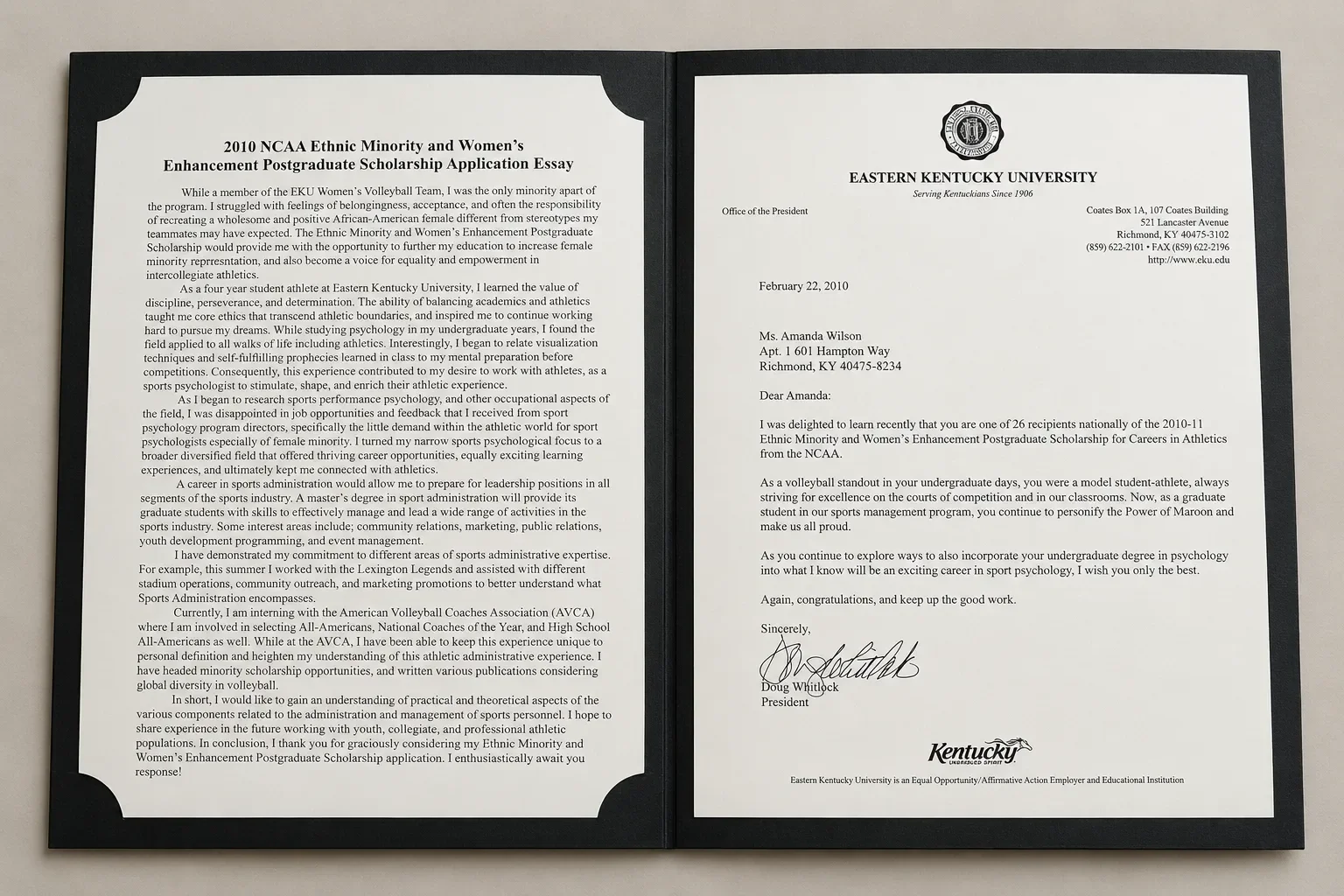
As graduation approached, I considered sports psychology, then began looking more broadly at the business of sports. In my application for an NCAA postgraduate scholarship, I described Sports Administration as preparation across community relations, marketing, public relations, fan programming, events and leadership.
My undergraduate education had been funded through my volleyball scholarship. Graduate school required a new equation. The NCAA scholarship covered part of it, so I pursued assistantships to cover the balance. The opportunity available was in Women's and Gender Studies.
There is a polished version of this story in which I intentionally designed an interdisciplinary education spanning psychology, race, gender and the business of sport.
I did not.
I was figuring out how to pay for graduate school.
Yet the accidental curriculum endured. Sports Administration exposed me to governance, communications, economics and organizational leadership. Women's and Gender Studies offered another lens on institutions, representation and power. An independent study led me to examine whether people running athletic organizations were actually being formally prepared for the breadth of competencies their jobs demanded.
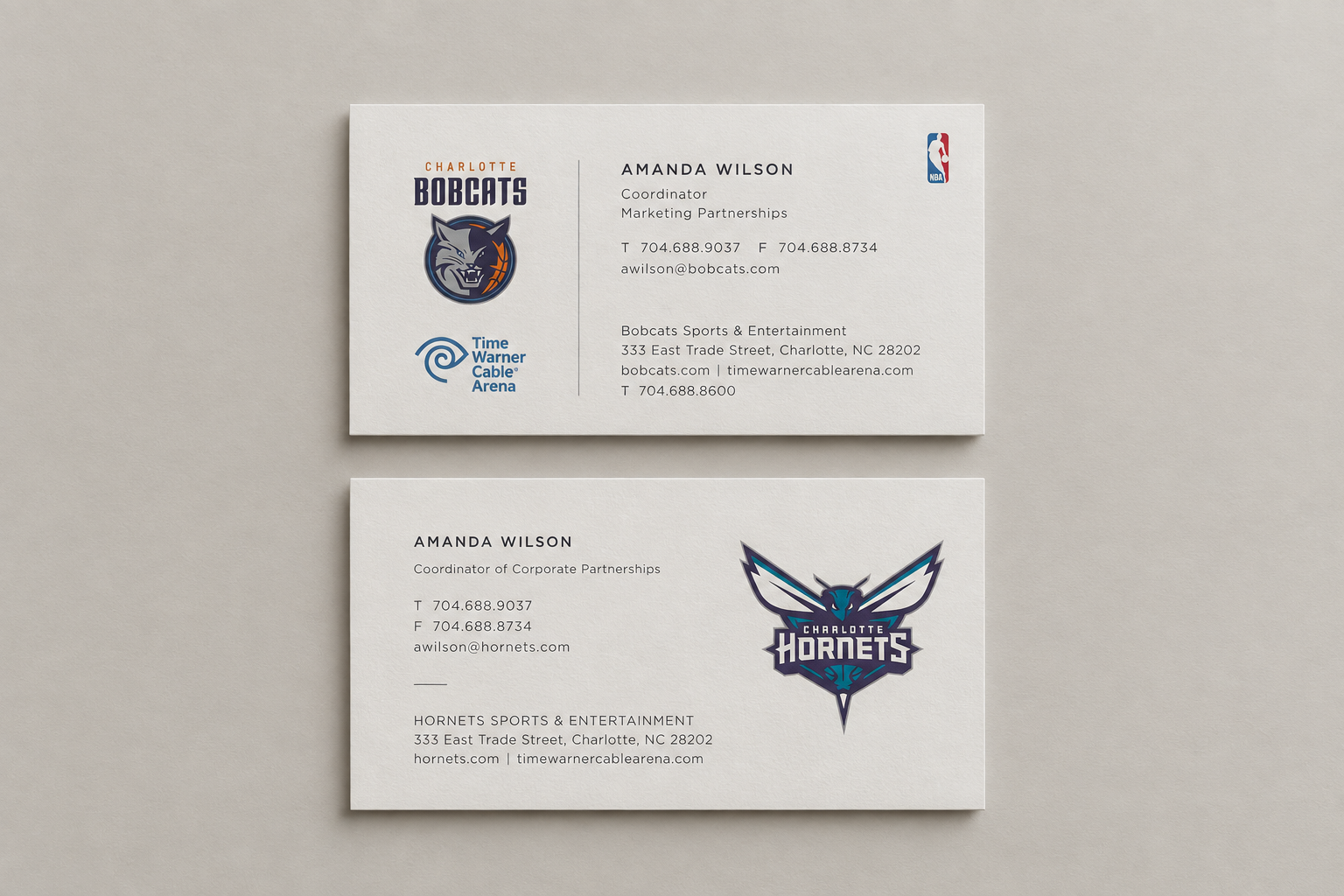
Meanwhile, I was working and interning in sports. Eventually an internship brought me to Charlotte, North Carolina, where professional sports became less an academic subject than a business I could observe operating around me.
The questions were beginning to travel with me.
Experience compounds when the context changes.
In professional sports, the game was the visible product.
Working in marketing partnerships gave me another vantage point.
I planned executive events where corporate sponsors and team leaders could gather around the business surrounding basketball: audiences, community programs, digital initiatives, fan engagement and the broader value companies hoped to create through their investment in sport.
The corporate sponsors represented very different categories, from consumer goods and home products to restaurants, retail, health care and financial services. What fascinated me was how often the people making those decisions sat in marketing or adjacent functions.
Sport could connect to almost any industry. Marketing was often the discipline translating that connection into business value.
At the same time, I had been building toward community relations, an area I had enjoyed through earlier professional sports internships and hoped would become my path within team sports. When a community and player programs role opened with the team, I pursued it seriously. I interviewed, assembled a portfolio of my experience and ideas, and believed I had prepared myself well for the opportunity.
I did not get the job.
I was crushed. But the experience also forced me to consider what I had been observing from my seat in marketing partnerships. If the path I had envisioned within team sports was not going to open, marketing offered a much larger field in which to apply what I had been learning.
I began to see marketing not simply as one function inside the sports business, but as a discipline that could take me almost anywhere.
So I made a deliberate decision to leave the sports industry and build my path in marketing. I also wanted greater earning potential. I trusted that if sports belonged in my longer arc, the opportunity would find me later.
Consumer goods gave me a different vantage point from which to observe how marketing creates value. I entered that world through logistics within a larger consumer goods ecosystem. Logistics was not where I wanted to build my career, but it brought me closer to the marketing organization I wanted to understand.
I moved toward it.
My work progressed into multicultural marketing and commercialization, where I became more fluent in consumer insights, targeting and segmentation, and learned to think across products and categories. Eventually, I moved into brand marketing. Each experience broadened my perspective across customers, consumers and brands. By the time I reached brand marketing, my experience included masterbrand strategy, portfolios, visual identity and experiential marketing.
What stayed with me was not one campaign or function. It was the relationship between marketing activity and commercial outcome.
Industrial technology changed the context again.
My scope expanded into B2B products and SaaS technology platforms, partner ecosystems and demand generation. I also became more fluent in the infrastructure beneath modern marketing: automation, CRM and the systems that help move an audience from message toward action.
I was becoming more comfortable entering unfamiliar environments, researching what I did not know and recognizing patterns in what I did.
Experience was behaving less like a ladder than a portfolio.
My next chapter brought me back to consumer goods during a global pandemic. This time, the work sat closer to the commercial intersection of retail customers and end consumers. Brands, customer priorities, consumer behavior and the realities of getting products into people's hands could not always be separated neatly.
It gave me another perspective on what marketing could be.
The opportunity carried a personal question too: whether work could bring me closer to Cleveland, Ohio, while preserving elements of the life I had built and enjoyed in Charlotte.
The geography did not ultimately unfold as expected, but the question stayed with me. Careers operate inside lives, and professional opportunity is only one variable in determining where those lives can work.
Afterward, I returned to the classroom through executive education at Northwestern.
The decision itself was a declaration.
After working across different dimensions of marketing, including some much closer to commercialization, I understood more clearly where my strongest interest remained: toward the top of the funnel, where audience insight, business strategy, brand, positioning and communications strategy meet.
I had contributed to business and brand strategy before. Formal study sharpened how I translated that strategy into marketing briefs: defining the business problem, audience, desired response and role of creative before execution began.
The contexts kept changing.
The method was becoming clearer.
Eventually, the intersections became the work.
By the time I entered financial services, technology no longer felt foreign. Neither did partnerships, portfolio thinking, consumer behavior or working across disciplines.
Brand, partnerships, community relations, marketing communications, advertising, digital products and technology converged. The work gave me another opportunity to observe how marketing can help make complex products understandable and useful to the people they are designed to serve.
The experience did not create the pattern.
It concentrated it.
That distinction matters because the larger lesson is not about one employer. It is about what happens when organizations increasingly need people to operate across boundaries their systems still use to classify them.
Cross functional work may require more accountability, not less.
The contradiction is easy to recognize.
Connect product and sales. Translate technical capabilities for customers. Orchestrate partners. Influence without authority. Integrate customer journeys. Turn insight into execution across teams.
Increasingly, the work crosses functions. The systems used to hire, level, compensate and evaluate people may remain much more clearly bounded.
I have experienced the benefit of that ambiguity. When complex work succeeds, contributions become shared, institutionalized and sometimes difficult to disentangle. Often, that is exactly what collaboration should produce.
But I have observed that the symmetry can disappear when something goes wrong.
That observation led me to a hypothesis:
Greater accountability in cross functional organizations may produce clearer business attribution.
Accountability and collaboration are not opposites. Clearer distinctions among ownership, contribution, influence and dependency may make collaboration more durable because success and failure can be evaluated against the same operating logic.
Otherwise, organizations risk asking people to cross boundaries to accomplish the work while allowing those boundaries to reappear selectively when the person is evaluated.
The question becomes more urgent as marketing, product, technology, data, sales and operations continue to converge. AI, platforms and increasingly interconnected customer experiences are only accelerating that convergence.
Organizations may be getting better at consuming connective capability than they are at identifying, evaluating and rewarding the people who provide it.
Range is not the absence of specialization.
Professional range creates value when accumulated experiences make someone better at recognizing relationships others may initially see as separate.
That does not eliminate specialization. It changes what the specialization may be.
The educational landscape I entered is already evolving. Disciplines that once sat adjacent to one another increasingly overlap. Sports management, marketing, technology, analytics and commercialization intersect in ways that would have been difficult to study as one coherent field when I was assembling pieces of them.
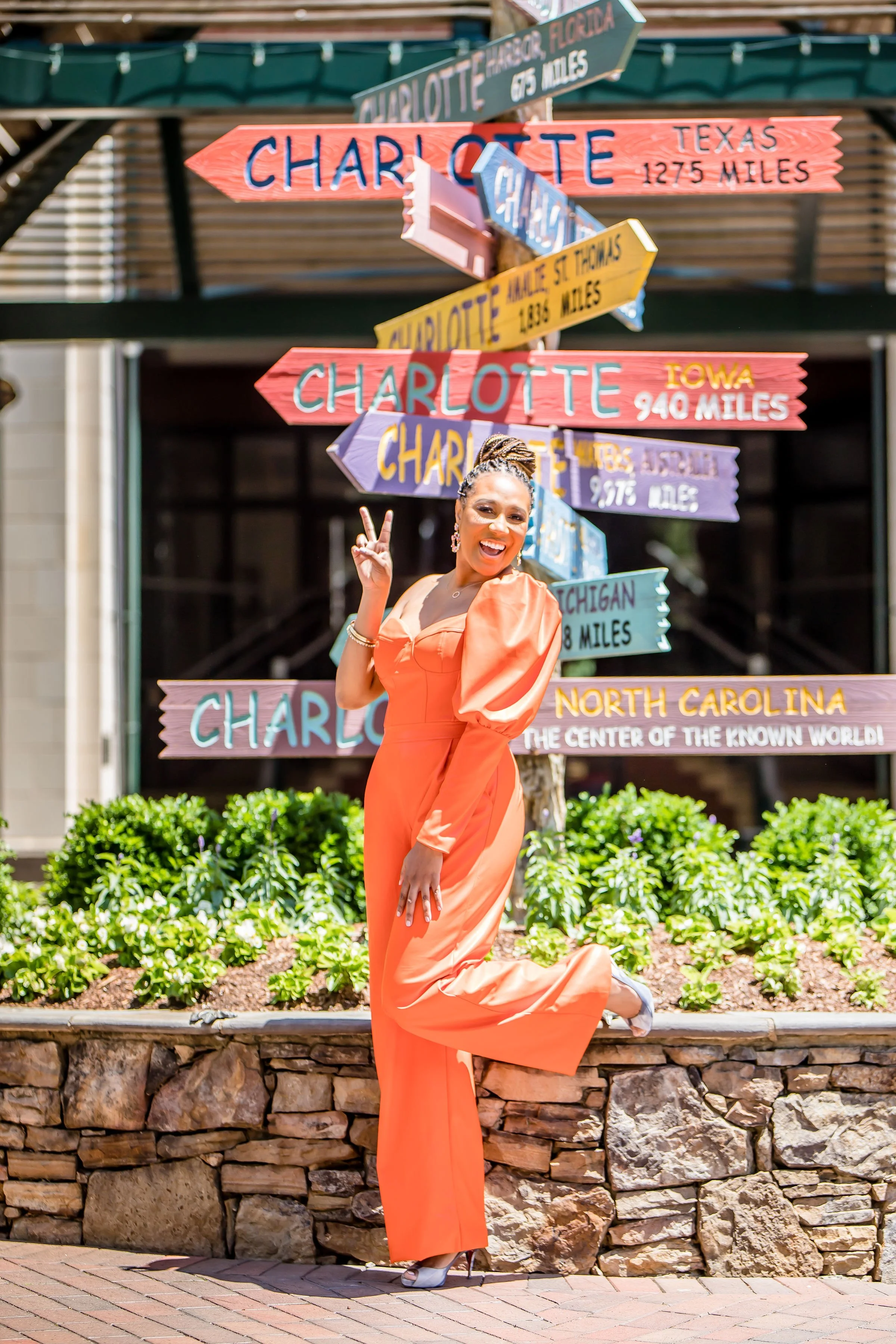
Women's sports has traveled alongside that evolution in my own life. I experienced it first as an athlete, wrote about access to volleyball through an undergraduate internship, and later encountered questions of gender and institutions from another perspective through my graduate assistantship in Women's and Gender Studies. What once appeared across separate parts of my education and experience has itself become a developing commercial and academic field.
Education does not simply prepare people for existing jobs. It gives people language for imagining which jobs can exist.
I had to assemble some of mine from adjacent disciplines, changing industries and accidental experiences.
Only later did I understand how they fit together.
Diversification may therefore be a better metaphor for range than generalization. A diversified portfolio is not valuable because it contains a random assortment of assets. Its value comes from what those assets contribute together.
Careers can work the same way.
But businesses ultimately require more than connections. They require transactions.
Whether the objective is selling a physical product, winning a customer, renewing a partnership or increasing adoption of a digital tool, commercialization turns strategy into an exchange of value. That exchange allows the broader ecosystem to sustain itself.
Across my career, the form of the transaction changed. The underlying question did not: how do you understand what people value, connect the right capabilities and move something from possibility to use?
For years, I thought I needed a better explanation for why my résumé crossed so many industries.
I was asking the wrong question.
The meaningful unit was not the industry.
It was the capability moving through them.
I would not call the career accidental, nor would I retrofit it into a master plan. I had direction. When I left sports, I knew I wanted to become the strongest marketer I could and trusted that the experiences I accumulated would eventually lead me toward work that fit.
Faith supplied a north star long before I had a map.
Some transitions I chose deliberately. Others arrived through circumstance, curiosity, geography or opportunity. The architecture became visible only after I had lived enough of it to look backward.
As I approach a milestone birthday, I have no interest in making that history tidier than it was. Some chapters were more rewarding than others. Some ended before I wanted them to. Some clarified what I wanted; others clarified what I did not.
But nearly thirty years after my mother had an idea and pushed a fifth grader from an athletic family to pitch it to the Cleveland Rockers, I can finally see something that child could not.
The throughline was never choosing the right arena.
It was learning how to enter one, observe the system around it, understand how value moves through it and make connections other people could use.
For a long time, I thought translation was something I did between jobs.
It may have been the job all along.
I still don't have the map.
I have the same north star, and the method I learned along the way.
That has been enough to find my way before.
I trust it will be again.
The views expressed here are my own. Examples drawn from professional experience are intentionally generalized and do not disclose proprietary or confidential information.